An action plan that was right in January can be wrong by October.
Dynamic Strategy keeps it right: the action plan adapts as the market moves, and people and AI agents work to it.
RELIABL.IT realigns the strategy and the action plan every time you add context, and researches the market on a schedule. After you approve, it reworks the strategy, the action plan and the agent instructions in minutes.
Markets move on their own calendar.
Most companies plan once a year. There is an offsite, a budget and a cascade, then quarterly reviews against the plan. The plan holds the year together, and changing it means opening the whole process again.
And AI agents now do part of the work. People notice a stale plan and quietly correct for it. Agents follow it, at volume.
What it looks like today:
- The plan was signed off in December. By March the market had moved.
- Re-planning takes as long as planning, so the old targets stay.
- Two projects should have stopped in spring. They were funded until November.
- The agents still run on January's instructions.
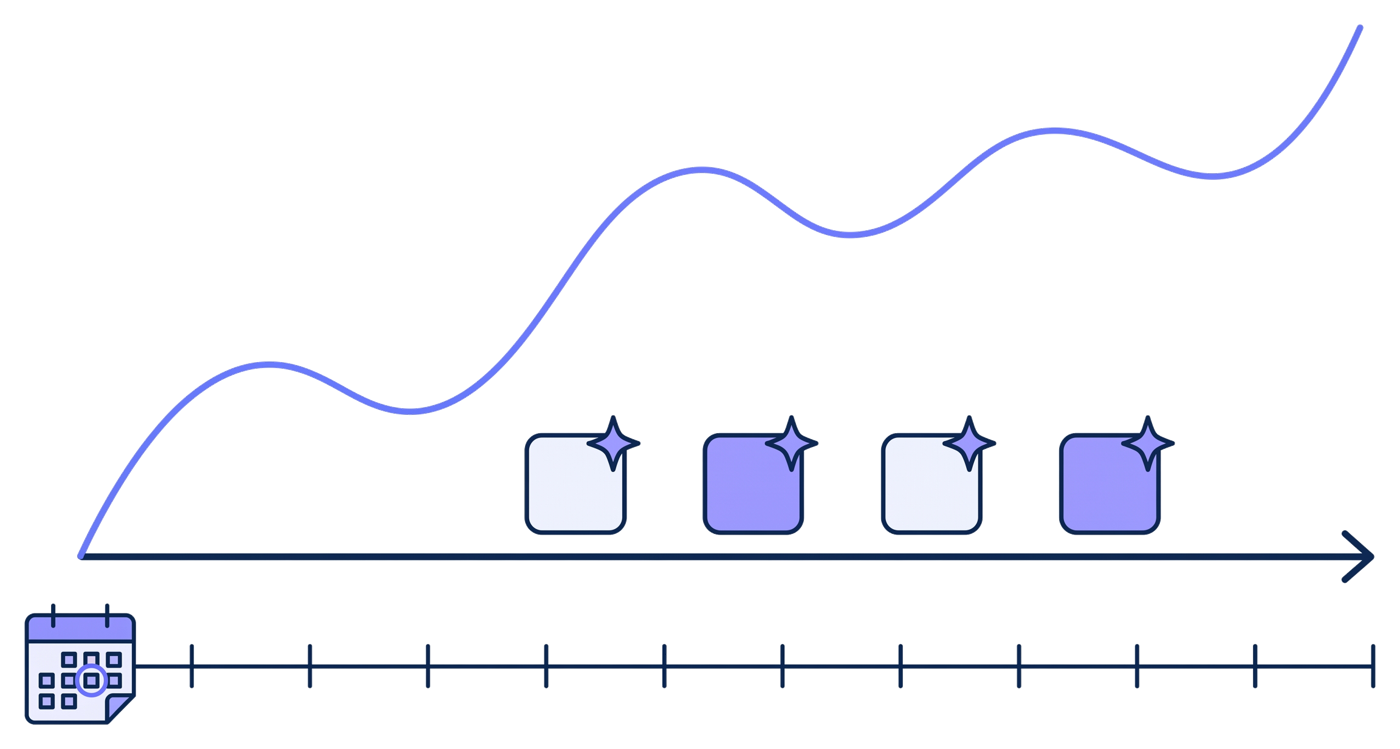
The plan changes on the calendar, and every change is made by hand. So companies change too late, or lose the strategy when they change fast.
Nobody watches the market against the strategy.
Signals arrive in emails, board packs and sales calls. Between reviews, nobody turns them into a decision.
Changing the plan by hand is a project.
Every department, every task and every agent has to be touched. So the change waits for the next cycle, or happens in one corner and breaks the rest.
Late changes are large changes.
A plan corrected once a year needs a big correction, and big corrections are the ones organisations resist.
Three ways companies keep a plan current today, and where each one stops.
Quarterly reviews and rolling forecasts
A business review every quarter, a forecast updated monthly.
Good at
A real improvement on the annual cycle.
Where it stops
They re-plan in events, and the change stops at the plan. The tasks and the agents keep their old instructions.
A strategy refresh with consultants
A project when the market shifts, or before the offsite.
Good at
Expert and thorough.
Where it stops
It happens once, and the next refresh is a year away.
Alerts in OKR and goal tools
Dashboards that flag what is off track.
Good at
It shows early what is off track inside your plan.
Where it stops
It mostly watches your own data, and someone still rewrites the plan by hand.
What it looks like when it is fixed.
- A market change reaches the leadership team as a proposed change, with its reason, on the schedule you set.
- The leadership team approves or rejects each change in one meeting.
- After approval, the strategy, the affected actions and tasks, and the instructions for the affected agents change the same day.
- Every new report or changed document realigns the strategy, the actions and the tasks: a board memo, a lost-deal review, a new regulation.
- Before a big decision, the leadership team compares two directions by the work each one creates.
The method, run by the platform.
Dynamic Strategy is the method behind RELIABL.IT, worked out in practice and written down in three books. RELIABL.IT runs it. Every time you add context, like a new report, meeting notes or a changed document, RELIABL.IT realigns the strategy, the actions and the tasks. Market research is the part it runs on its own, on the schedule you set, and you can run it at any time.
You decide. Every recommendation comes with its reason, and nothing changes until a person approves it. Most proposed changes are small adjustments to work already running, and you reject any that do not fit.
After approval, RELIABL.IT reworks the strategy, the affected actions and tasks, and the instructions for the affected AI agents in minutes. Before a big decision, the Playground shows two directions side by side, each with the work it would create.
Proposed changes
Each one with its reason. Nothing changes until you approve it.
EDIT International Market Strategy
Update international scale from FY2025's 6% non-DACH share to the H1 2026 8% share and identify the remaining concentration risk.
NEW International Market Strategy
Add the implementation and localization dependencies that must accompany European expansion.
EDIT Execute European International Growth Program
Update the international baseline to H1 2026 and add the research-backed diversification risk to the program objective.
After approval: what changed in the strategy
Before
FY2025 non-DACH revenue was €11.6 million, representing 6% of total revenue; this establishes international expansion as a material growth opportunity from a still limited revenue base.
After
Non-DACH revenue reached 8% of H1 2026 revenue, up from 6% in 2024; the base remains small, leaving 2027 growth dependent primarily on DACH execution and cloud migration. European expansion depends not only on language coverage but also on implementation capacity, local labour-law configuration, works-council engagement, payroll interfaces and local reference customers. The strategy should therefore track country-level pipeline, bookings, win rate, implementation backlog, deployment duration and partner-sourced share before broadening investment.
And the action it affects
Execute European International Growth Program
Focus international expansion on existing European markets outside DACH by selecting priority countries and segments, quantifying revenue and pipeline contribution, and aligning localization, multilingual product support, implementation, customer success, partnerships, sales capacity and country-specific labor, privacy and compliance readiness, while addressing that non-DACH revenue reached only 8% in H1 2026 and remains under-diversified.
Next to the annual planning cycle.
The annual planning cycle
- Someone watches the market before the offsite
- The plan changes once a year, with quarterly reviews
- The strategy deck changes; each department rewrites its own plan
- Weeks to months from decision to changed work
With RELIABL.IT
- RELIABL.IT realigns with every new document, and researches the market on a schedule
- The action plan changes whenever a signal or a document justifies it, after approval
- The strategy, the action plan and the agent instructions change together
- Minutes for RELIABL.IT's part; your review sets the pace
This closes the loop.
The strategy, the action plan and the AI agents stay current together. See a real alignment on the example company, run on 13 October 2026: a market signal, three proposed changes with their reasons, then the strategy and the action after approval.
See it on an example company.
First action plan in minutes. You set the pace from there.